
LIVERPOOL’S PRIDE FESTIVAL IS BACK! BUT WHAT DO YOU KNOW ABOUT IT’S FAB FASHION HISTORY?
- Destined Magazine
- Jul 17
- 5 min read

A conversation with Amy Kilroy on the importance of fashion at
Liverpool Pride.

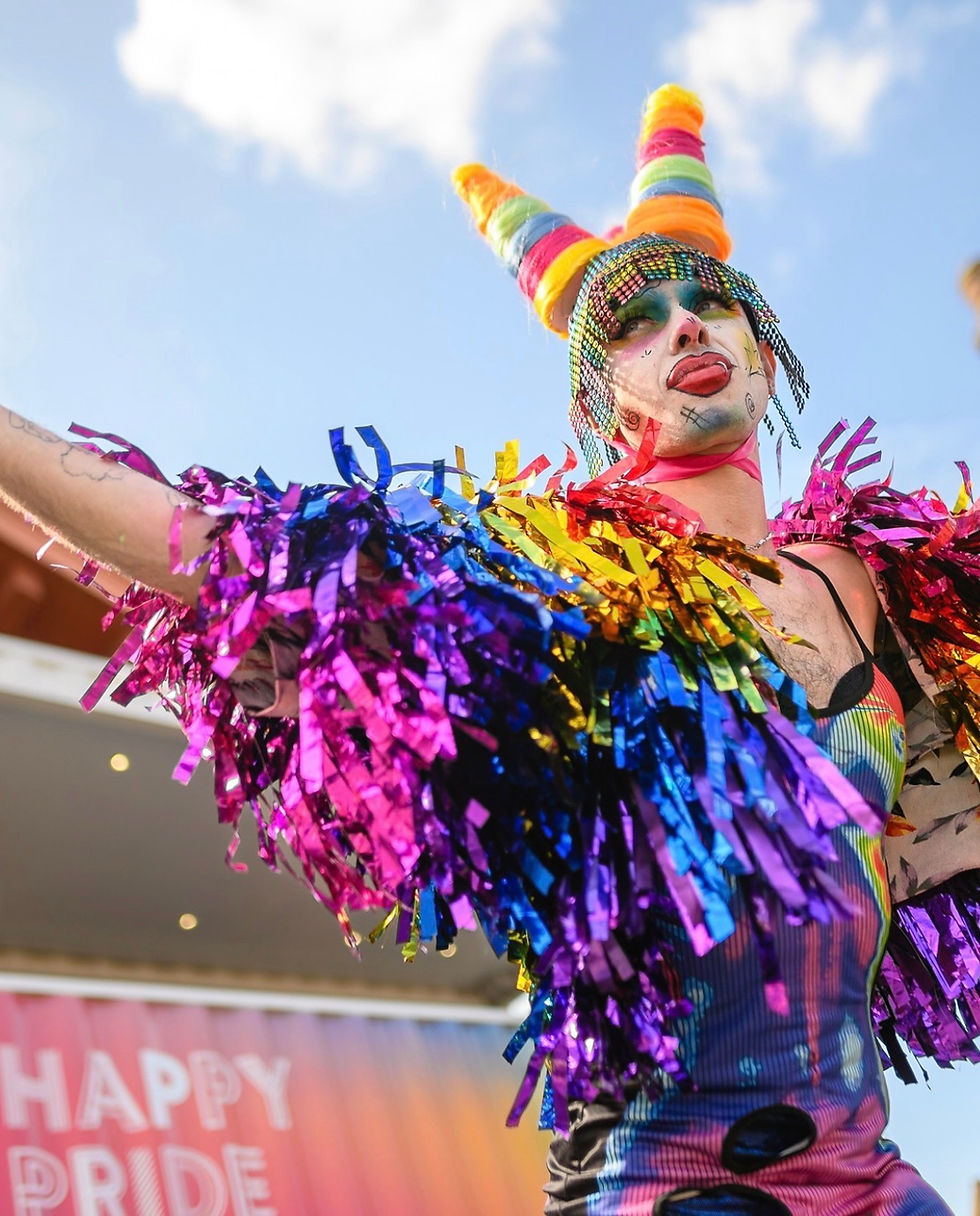
The one thing I always look forward to at Pride is the colourful cast of frocks
galore... which is obligatorily accompanied by that year’s highest-streaming
gay pop anthem (and Lady Gaga's Born This Way too, of course). The fashion
at Liverpool’s Pride in particular is always known locally as a brilliant collision
of this high-camp, working-class glamour with a sprinkle of defiant queer joy to
top it all off.
Rooted deeply in Scouse culture, the city’s LGBTQ+ community wields the
anti-trend style as a punchline armour as the Queen of drag RuPaul once
famously put it: "We’re all born naked and the rest is drag.”
So, join me as I take a deep dive into the typical fashion trends that come with
Liverpool Pride, all in anticipation of this year’s upcoming festivities!
Working-class Glamour: Defined
Working-class glamour, to many, is the bold art of transforming everyday utility
into striking, resilient style. Born from resourcefulness, it embraces high-
drama elements like oversized hoops, bold makeup, and pristine trainers,
elevating practical durability into a defiant, distinct aesthetic deeply rooted in a
communal identity and local pride.
Rooted in subcultures across industrial hubs - from Liverpool to the East End
of London... This aesthetic celebrates a "look at me" confidence that refuses
to be ignored, even when budgets are tight. Characterised by pristine
grooming, clever adaptations, and a "Sunday best" mentality that turns a trip
to the local shops or a night out into an opportunity for authentic, unapologetic
self-expression, the true essence of this glamour remains a localised, deeply
personal rebellion against societal expectations. Imagine, for example,
Liverpool Pride without its bedazzled LFC jerseys! It’s exactly this community
spirit and DIY approach to pride that makes it all the more meaningful.

“Yeah, but it’s More Than Just a Trackie!”: The Scouse Queer Aesthetic
You won't catch Liverpool's queer community doing a beige, minimalist Pride.
The Scouse identity itself thrives off of its own terrace culture, typically
adorning branded wear, bright colours and casual style, yet, with its distinctive
shift post-eighties, Lime Street is now filled with a much more vibrant display.
From gothic teenagers gathering around St James Cathedral, to grunge LIPA
bands around the Baltic and the clean-girl realness at Liverpool One. So, why would pride be the exception to this rule? Instead, the local aesthetic is
unapologetically extra. It is about taking the classic staples of the “Scouse
prinny” fashion... glowing tans, sculpted brows, and healthy doses of leopard
print, and amplifying them straight into the stratosphere.
Historically, Liverpool's queer community has used fashion as a tool for
survival, with figures like April Ashley in the 1960 s and 1980 s activists setting
the stage for modern, defiant style. This legacy of using clothing as resistance
and, later, the formalisation of Pride in 2010, shapes the vibrant, working-class
glamour seen in today's celebrations.

When the streets transform for the annual parade, dopamine-dressing takes
centre stage. Historically twisting its way past the Pier Head, down the Strand,
and toward the waterfront (shifting this year to a fully pedestrianised route
winding from Clayton Square through Liverpool ONE to Lord Street) the
parade sees traditional gender norms stumped right there on the pavement
under the heel of a neon pink Primark boot.
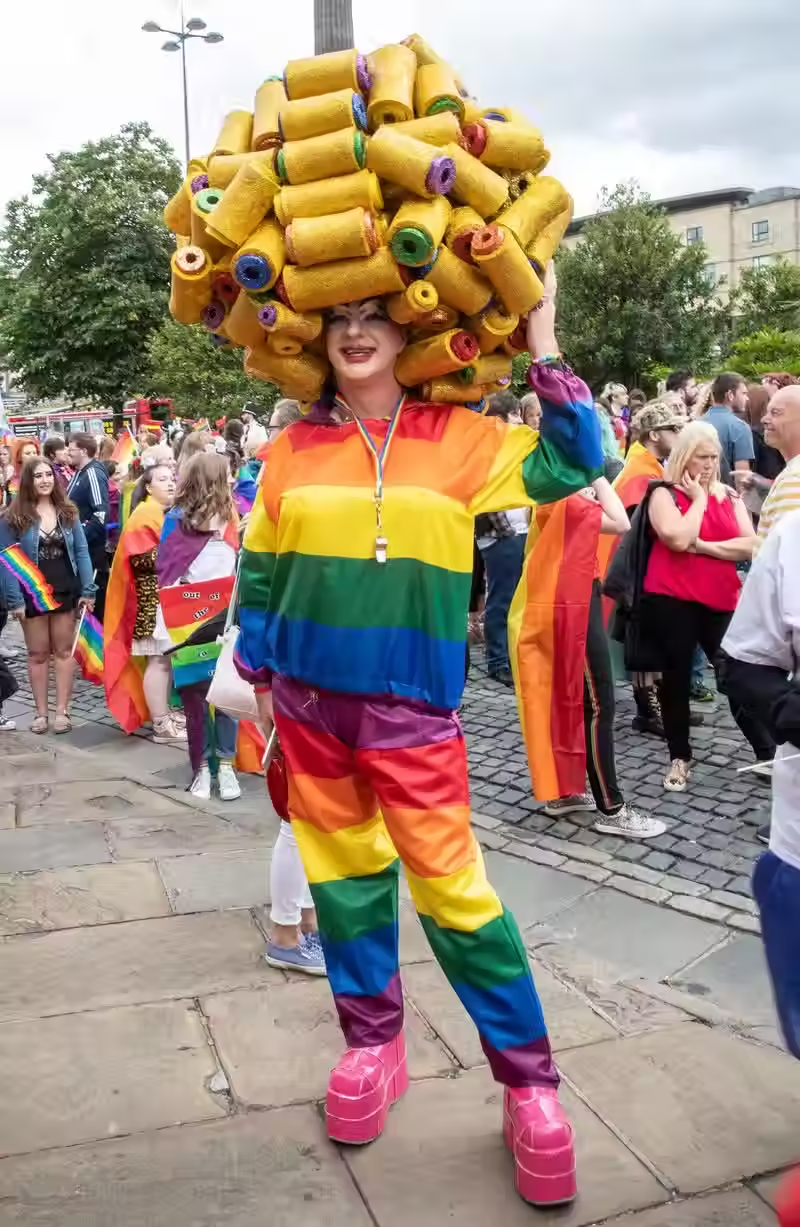
The typical Pride outfit is an explosion of DIY. My favourite pieces have to
include flag capes, customised football shirts and layered tulles that defy the
laws of gravity, all coming together to create an outfit, while trashy to some, is
fun to the majority of those at pride! You will see matching co-ords completely
drenched in glitter, statement sunglasses shaped like flames, and standard
denim transformed by rows of hand-threaded safety pins. Furthermore,
elevated basics are taken to the max!
Woven perfectly into this hyper-vibrant tapestry is Liverpool's brilliant furry
community. Marrying the city's love for absolute structural maximalism with
queer expression, the local furries don custom-crafted fursuits complete with
neon accents, pride-themed bandanas, and matching pride flags pinned to
their tails. It is a subculture that thrives on pure, unadulterated joy and that
truly comes to life during the parade. Sure, it may be one of the more
controversial subcultures, but in the end, Liverpool Pride is all about
celebrating the art of being beautifully, loudly yourself.
Subverting the Status Quo
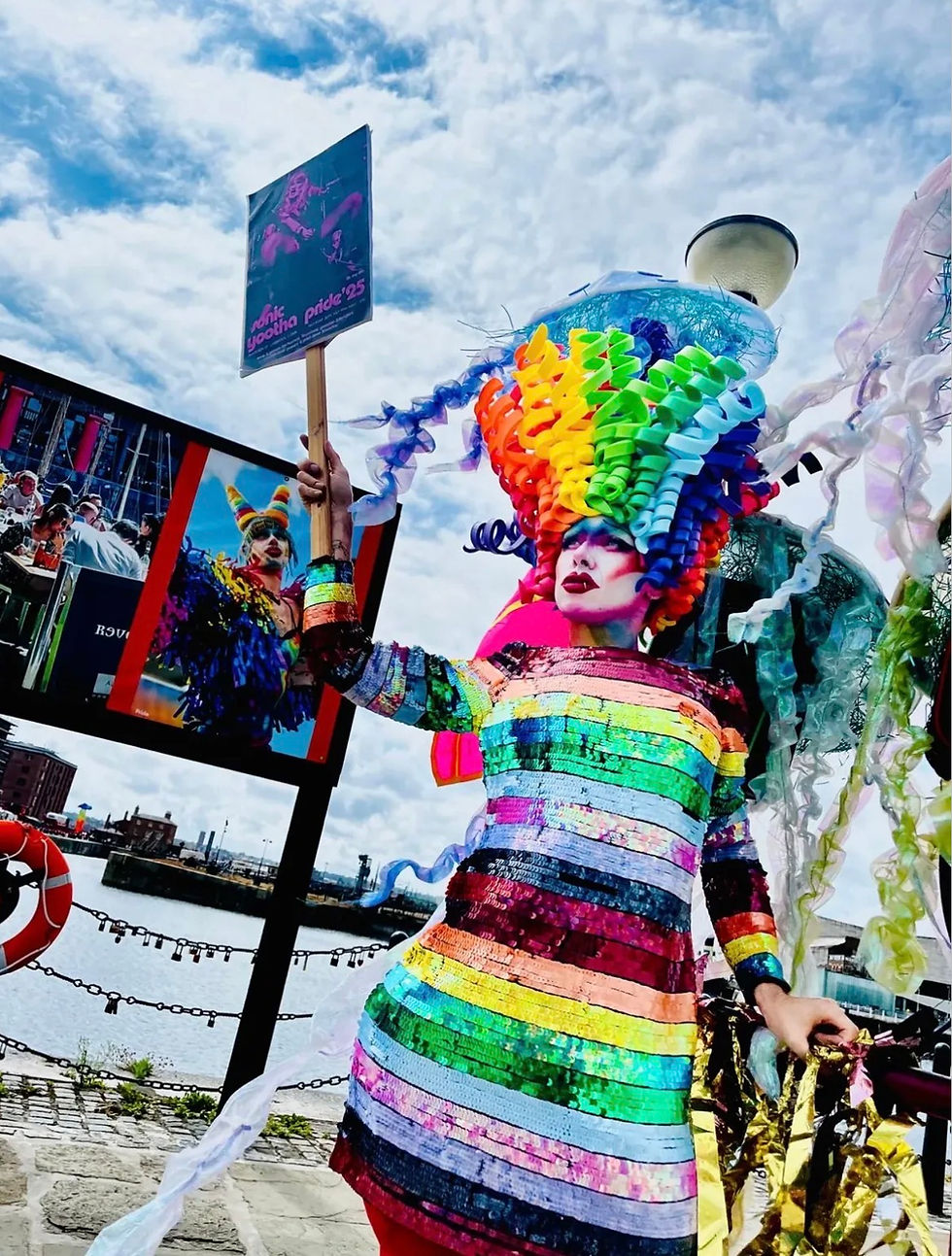
Undoubtedly, there is a sharp, analytical edge to this flamboyant expression.
For the LGBTQ+ community in Liverpool, fashion has always been a way to
claim space in broad daylight. In a city shaped by maritime grit and working-
class solidarity, queer fashion reclaims hyper-femininity and theatrical
masculinity, turning them into deliberate acts of resistance. Take Bold Street
for example! Prided on its independent nature and alternative appeal, the
street has continuously questioned what exactly Scouse fashion is.
When local icons like Gareth Williams (affectionately known as "Mr. Pride")
repeatedly don their iconic rainbow-ironed suits for the LCR Pride Foundation
march, he makes a testament to queer visibility. Through the lens of social
media and local queer storytelling, the everyday street corners of Liverpool
are further rewritten; a public space that might feel hostile on a rainy Tuesday
in November becomes a triumphant runway on a sunny afternoon in July.
Henceforth, with marches from local charities, bands and voluntary groups,
the essence of an outfit at Liverpool pride breaches, undoubtedly, into the
realms of activism.

From OMG to CampUS: A New Era on Victoria Street
Of course, the runway doesn't stop when the parade disperses; it just migrates
to the Pride Quarter, where the nightlife fashion is undergoing its own
monumental glow-up. This Pride weekend marks a bittersweet but electrifying
changing of the guard on Victoria Street, as the iconic OMG Gay Club closes
its doors to make way for Campus. For years, OMG served as a safe-haven
sweatbox of core memories, cheap drinks, and unapologetic pop bangers.
Stepping into that legendary footprint, CampUS to elevate the space into a
premium, high-energy hub while keeping the soul of the community intact.
Launching just in time for the Pride weekend madness, the venue is anchoring
its fresh identity with the city's fiercely talented resident drag group, The
Sorority Sisters. Featuring the unmatched comedy, vocals, and visual
structural triumphs of Natasha Von Spirit, Carmen Sutra, and Genevieve
Renée, this trio embodies everything that makes Scouse drag elite and
honours that of legends like Danny Beard! If their opening weekend lineup is
any indication, CampUS is sure to set the gold standard for the next
generation of working-class glamour and fierce, theatrical queer nightlife.
So, where does this leave us as we watch the final acts of the city's
preparations unfold?
With further events after the parade such as the Sapphic Social rooftop party
and the iconic Sonic Yootha night at Kitchen Street taking over Pride
weekend, the excitement is undeniable. I am eagerly counting down the days
while reflecting on the heartfelt fashion and deep sense of pride within our
local community. Safe to say, Scouse pride is one of the many reasons I am
proud to be a queer Liverpudlian, and I know many of my peers feel exactly the same.
By Amy Kilroy


